
Paris apartments are appreciating again, and patient buyers who act in 2026 may look back on this quarter as the right moment.
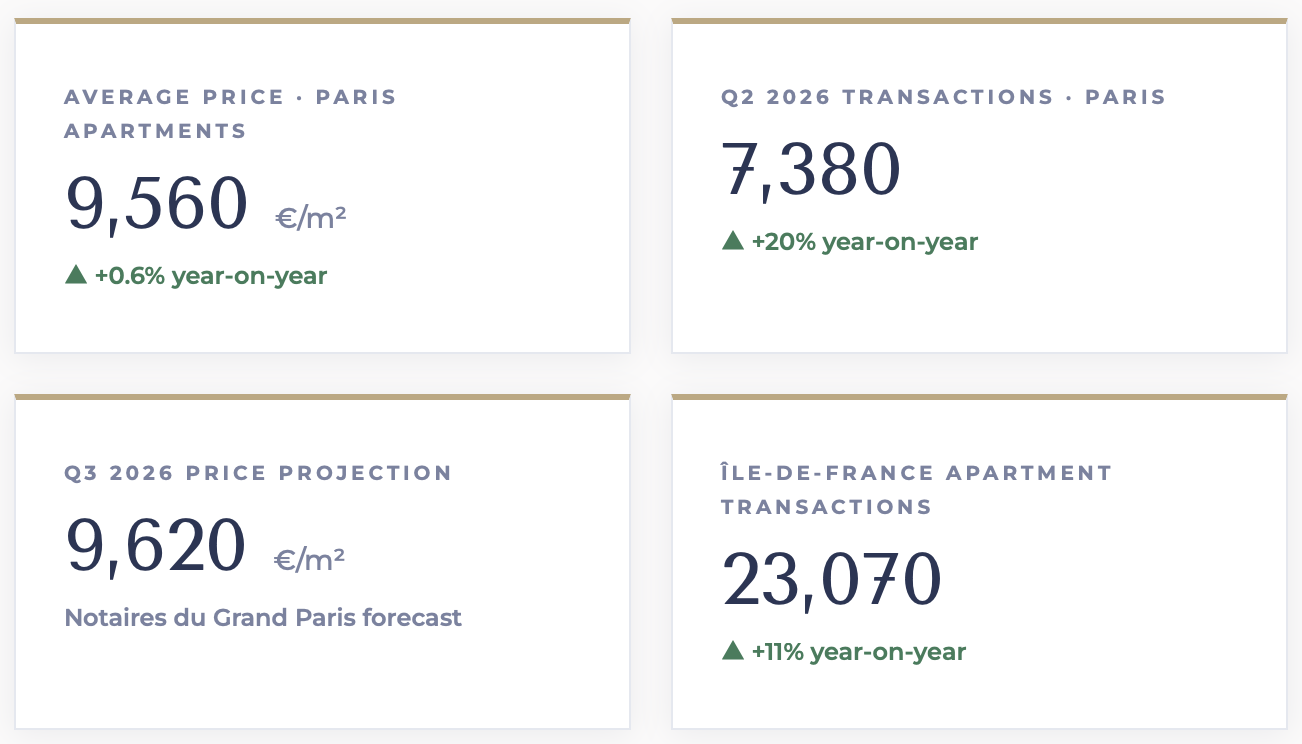
The Paris apartment market posted its strongest quarterly transaction volume growth in years during Q2 2026, with 7,380 sales, a 20% year-on-year increase, while prices remained measured and sellers willing to negotiate. This report, produced by Laroche Groupe for prospective American buyers, translates the latest Notaires du Grand Paris data into the context you need to make an informed decision.
A recovering market, still in the buyer’s favor
After two years of price correction driven by rising interest rates, the Paris apartment market has found its footing. Prices are rising modestly while transaction volumes have surged, the hallmark combination of a market transitioning out of its trough.
The Volume Signal
A 20% surge in transaction volume is not noise, it is buyers returning to the market with conviction. This is the most significant annual increase Paris has recorded in years, and it comes against a backdrop of relative price stability. When buyers return faster than prices rise, it creates a window: the early entrants of a recovery cycle often secure better value than those who wait for confirmation.
The Seller’s Posture
Notaires data confirms that sellers remain more flexible than they were in 2021–2022. The marked decrease in investor activity, driven by tighter credit conditions and evolving tax regulations, means owner-occupier sellers now dominate the market. These sellers are often motivated by life circumstances rather than return optimization, making principled negotiation both possible and productive.
PRICE COMPARISON
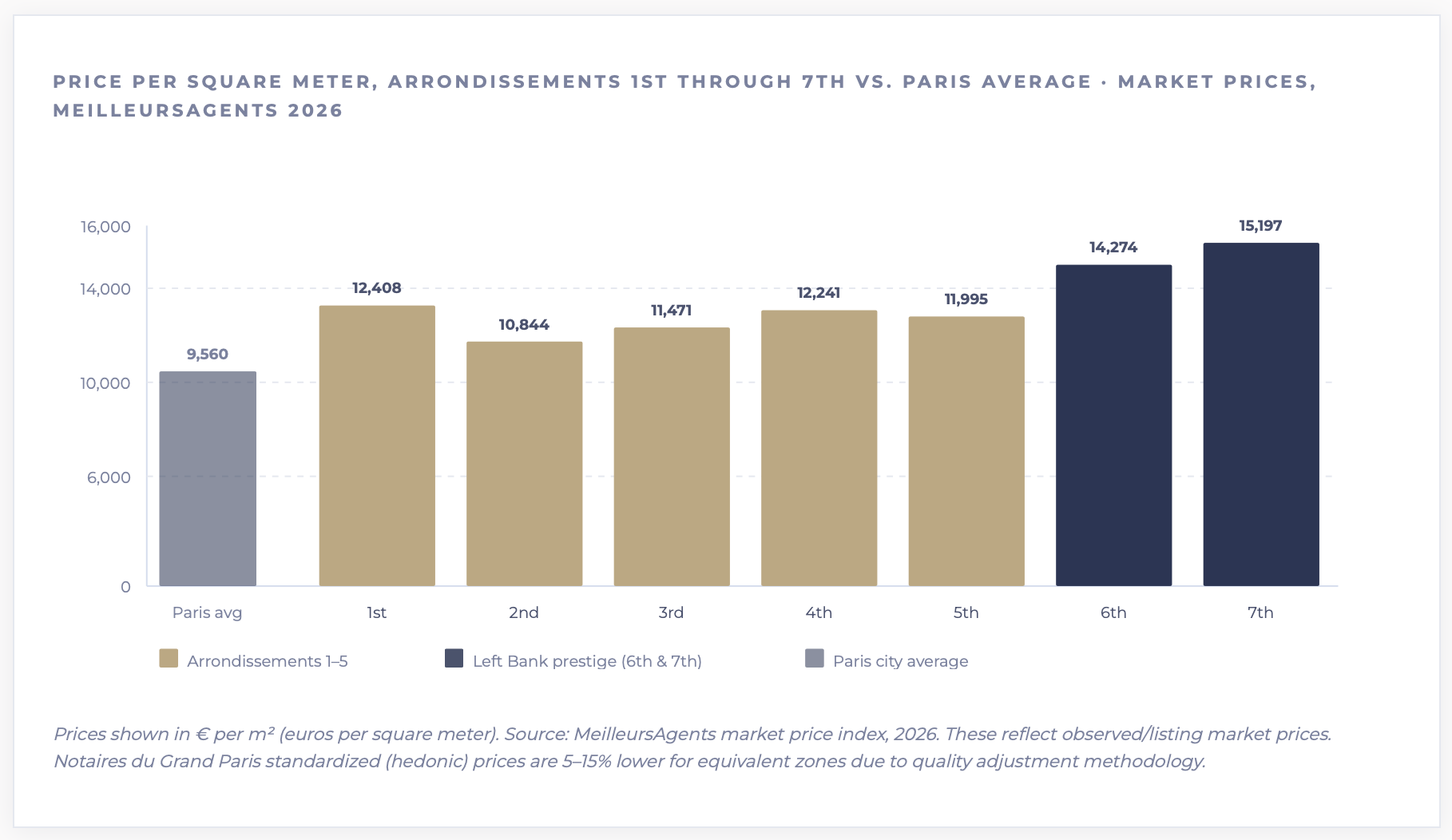
Arrondissement prices at a glance
IN-DEPTH ANALYSIS
The seven arrondissements, character, price, and opportunity
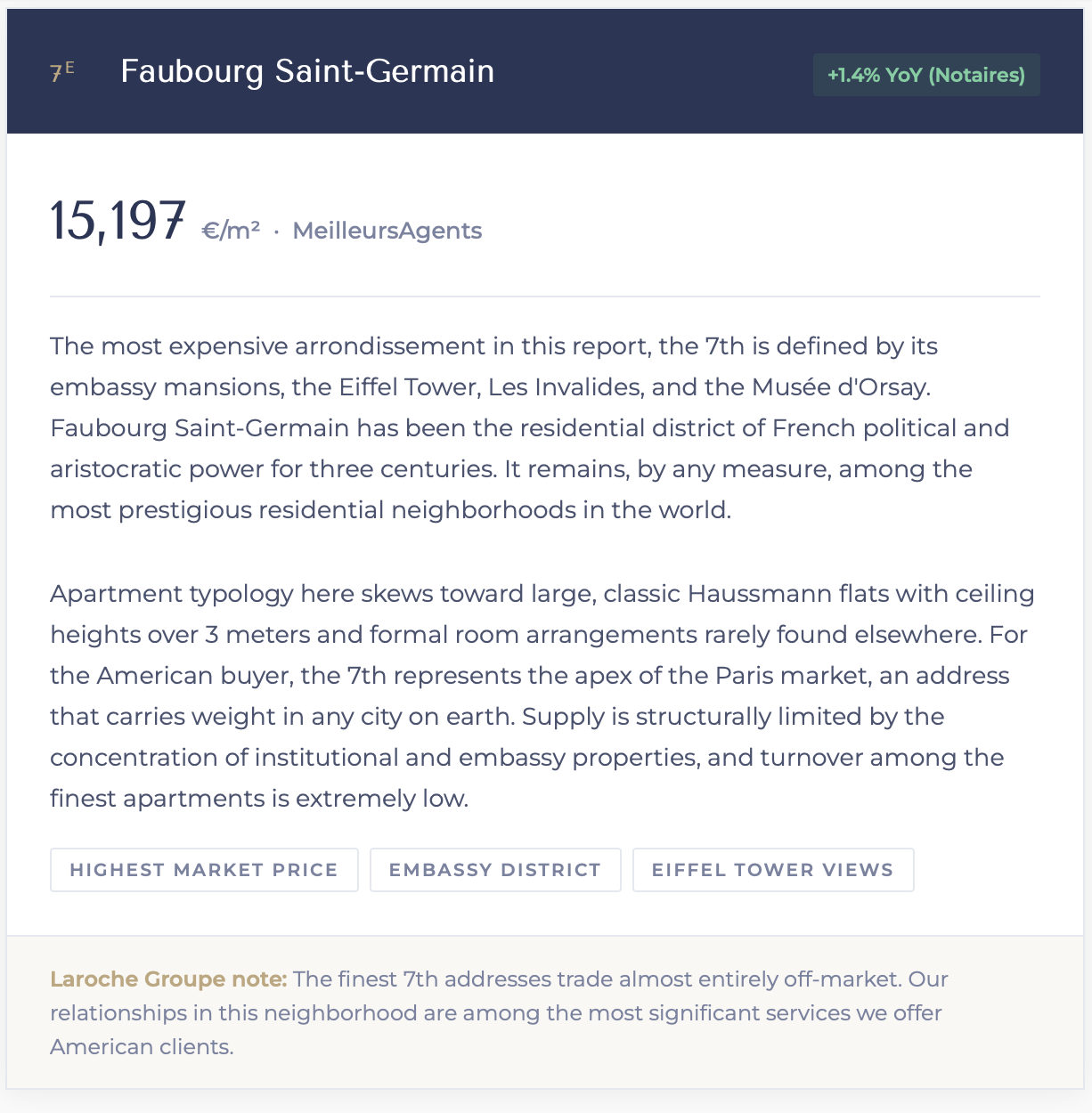
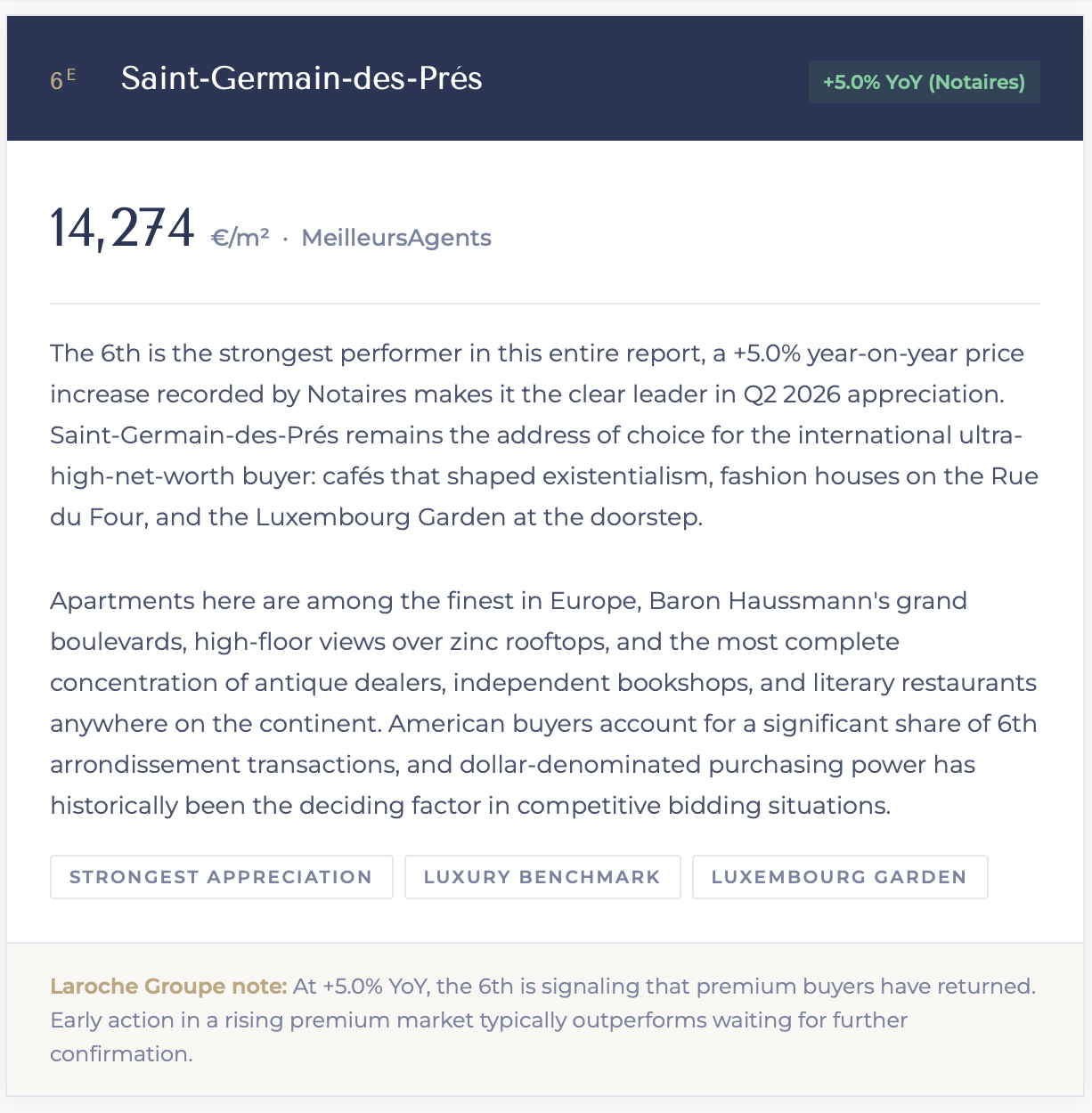
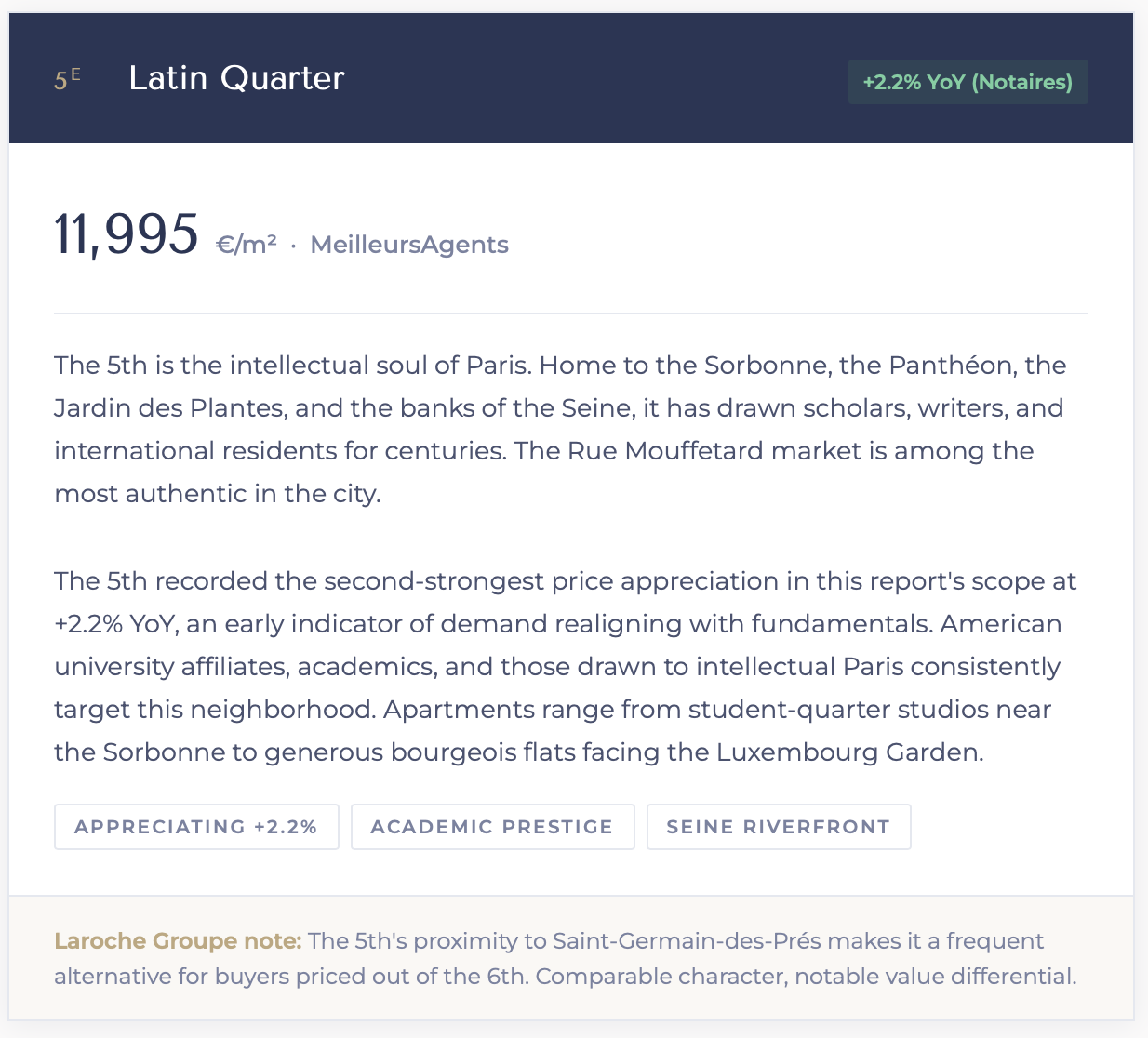
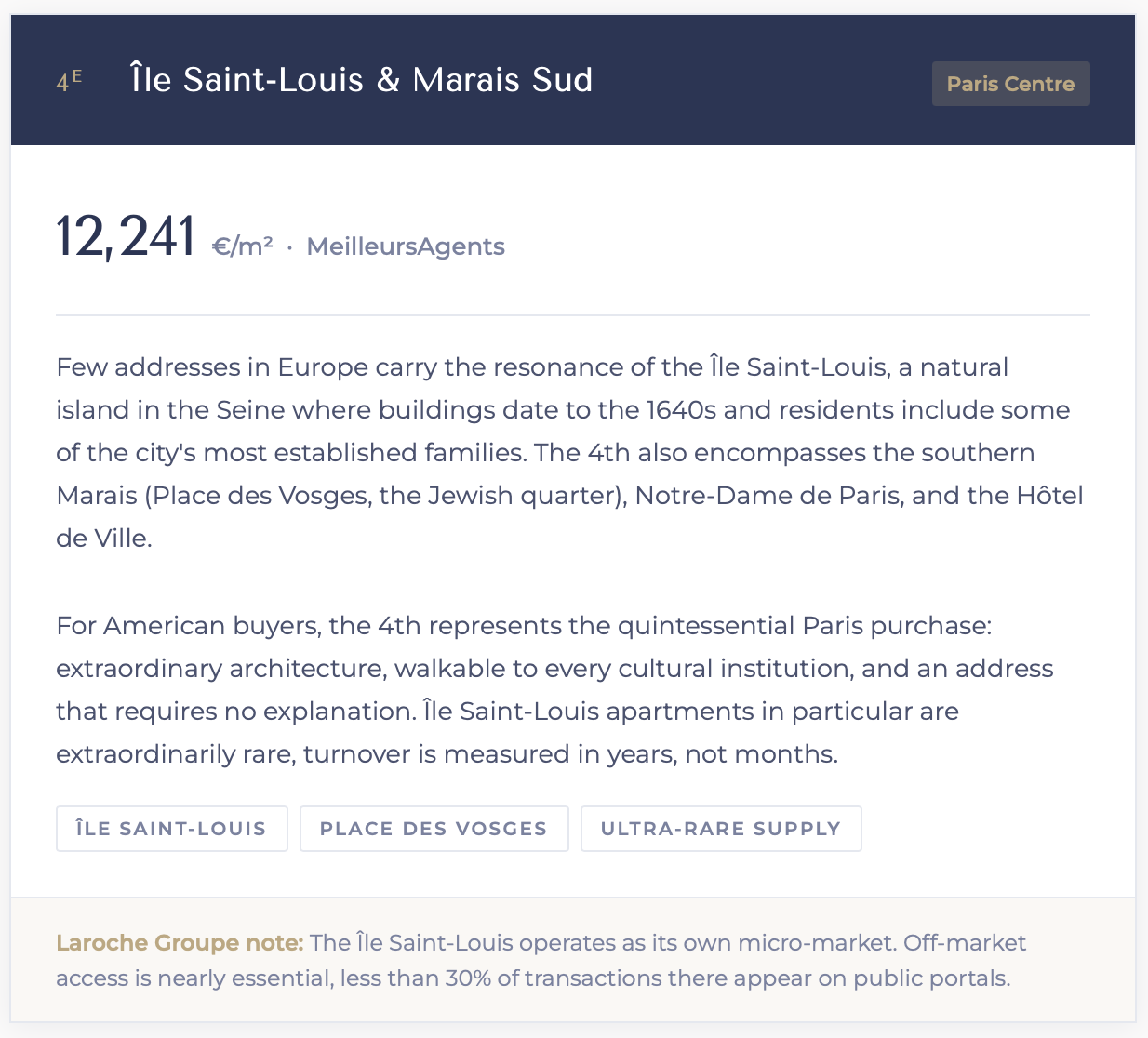
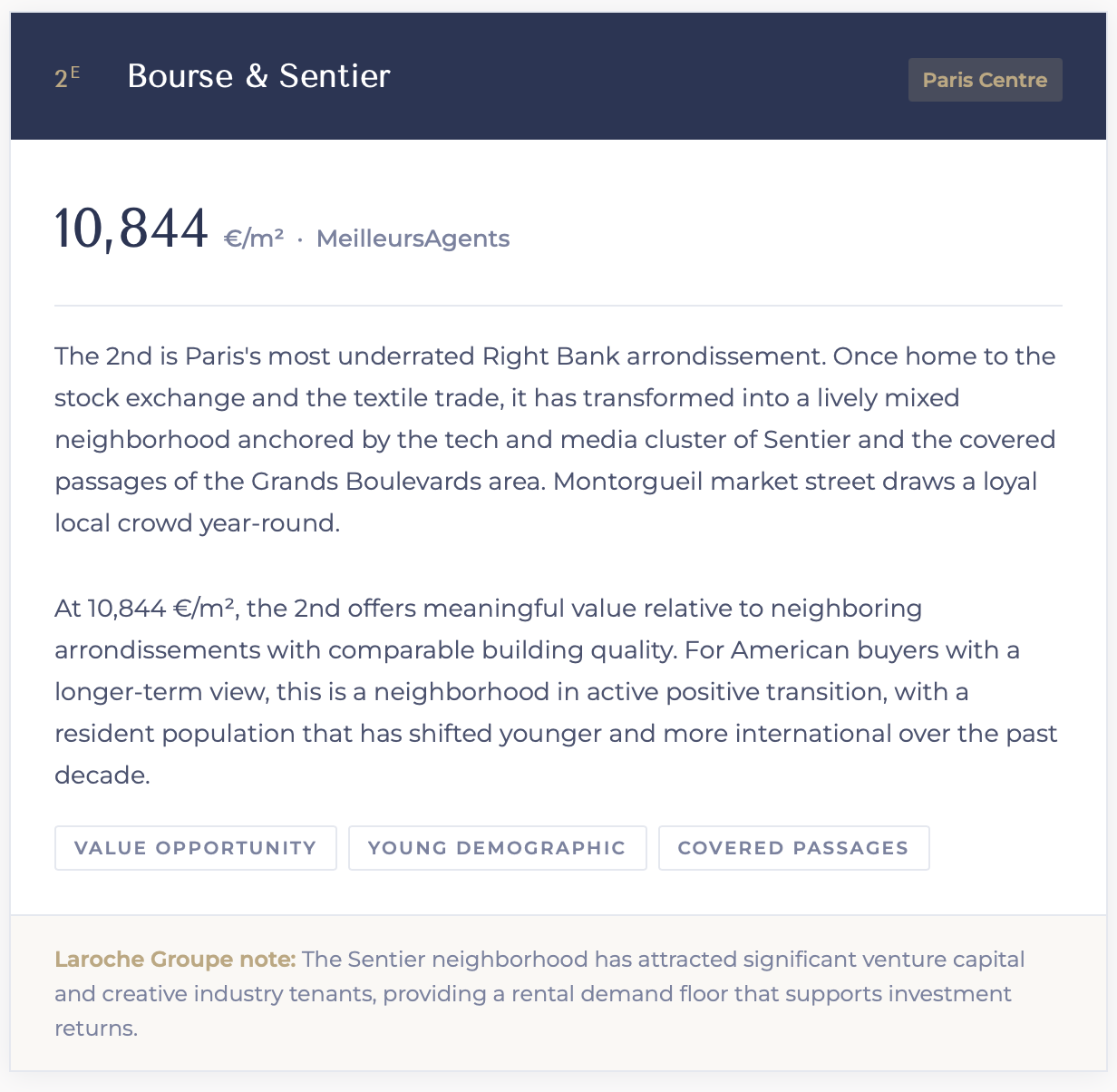
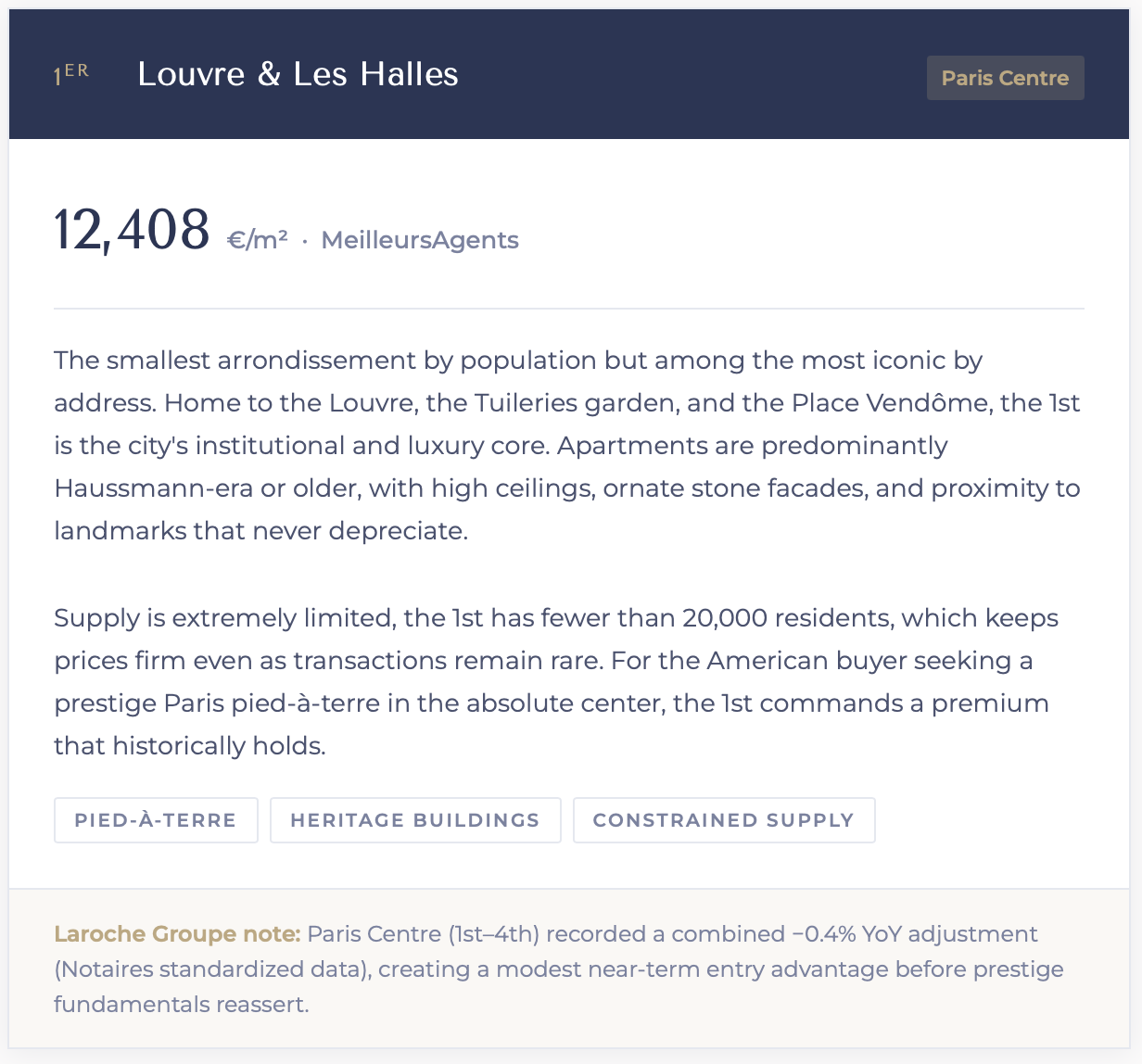
Each of Paris’s arrondissements has a distinct identity, a particular buyer profile, and specific considerations for American purchasers. Below is our analysis of the 1st through 7th, the historic heart of the city and its most internationally-sought residential neighborhoods.

MARKET OUTLOOK
What comes next, Q3 2026 and beyond
Notaires du Grand Paris projects Paris apartment prices at 9,620 €/m² for Q3 2026, a continuation of the gradual upward trend established in Q2. The structural story, however, is more compelling than any single quarter’s data.
TAILWINDS FOR BUYERS WHO ACT
- Volume recovery signals underlying demand that will support further price appreciation as supply remains constrained
- The 6th arrondissement’s +5.0% YoY performance suggests premium neighborhoods lead recoveries, historically typical of Paris market cycles
- European Central Bank rate trajectory trending toward further easing, which will expand the French buyer pool and increase competitive pressure on desirable properties
- Paris’s role as a global city has been reinforced by the 2024 Olympics and its post-event international profile; the city’s residential appeal to international capital is structurally increasing
- Limited new construction in central arrondissements means supply constraints are durable, not a temporary feature
RISKS TO MONITOR
- Interest rate uncertainty in both the U.S. and Europe introduces potential FX volatility for dollar-denominated buyers
- French political and fiscal policy remains a source of uncertainty for investors, though the Paris residential market has historically been insulated from domestic political cycles
- Investor retrenchment, while currently a buyer advantage, could shift rapidly if credit conditions ease and institutional capital returns to the market
- Rental regulation has tightened in Paris over the past five years and may continue to evolve, affecting income returns for those purchasing with a rental component in mind
Our assessment: Paris in Q2 2026 presents a window that is open but not unlimited. Prices are rising, volume is recovering, and the factors that have historically driven Paris property appreciation, global appeal, constrained supply, and irreplaceable architecture, remain fully intact. For the American buyer whose timeline is flexible, acting before European financing conditions fully normalize is likely to deliver the most favorable entry point of this cycle. The market has already turned; what remains is timing within a recovery, not catching a falling market.